Vines in Winter
- artifactorrs
- Jun 15
- 3 min read
Composition
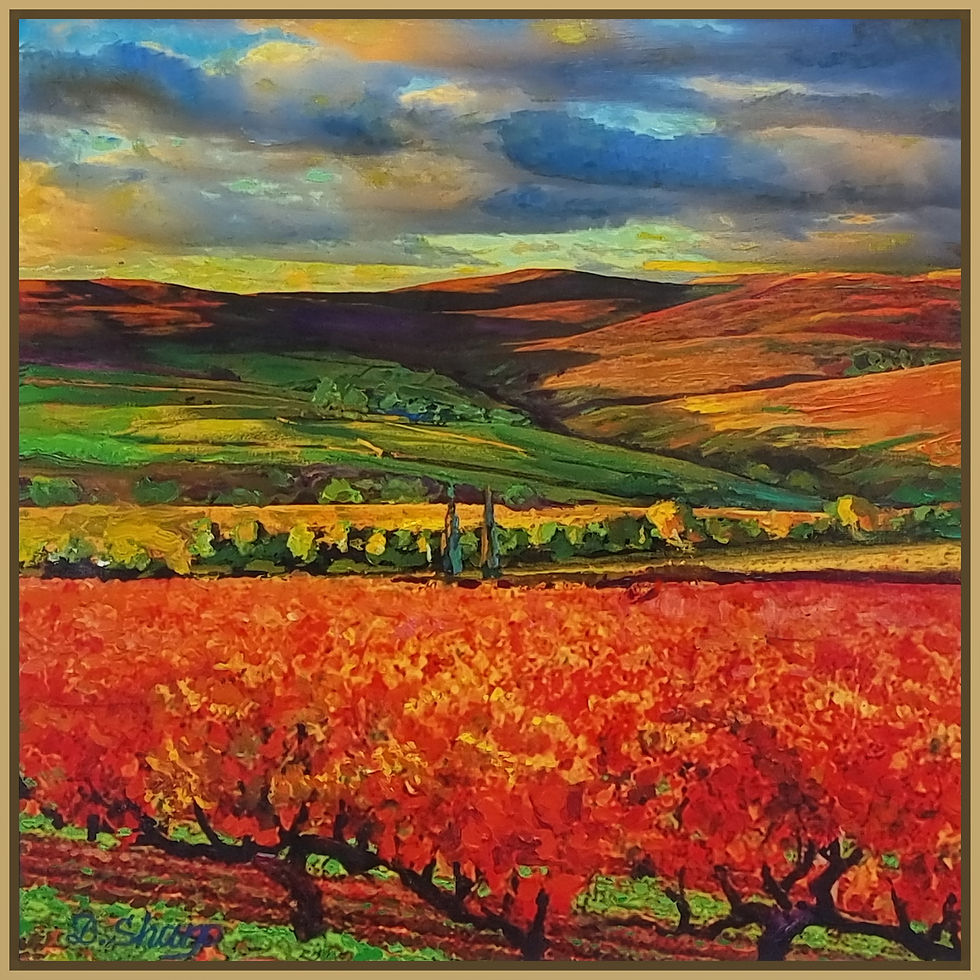
The structural anatomy of “Wines in Winter”, utilizes a series of dramatic horizontal strata that guide the eye from an intense foreground into an expansive distance. The lower third of the canvas is anchored by dense, rhythmic rows of dormant grapevines, characterized by low, gnarled, dark-toned trunks sweeping diagonally across the bottom plane. Directly above this fiery ground, a tight, protective barrier of trees and low hedges cuts horizontally across the midground. Beyond this line, the landscape opens into rolling, terraced hills that step upward in interlocking, geometric fields. The composition culminates in a turbulent, cloud-heavy sky occupying the upper third, which mirrors the rich complexity of the terrain below.
Inspiration
The painting captures a heightened moment of seasonal transition, drawing inspiration from the intense, hidden vitality of agricultural landscapes during the deep winter months. Rather than depicting winter as a monochrome or barren period, the artwork leans into the idea of a land in active, passionate rest. The inspiration stems from the raw interplay of elements where the dormant, iron-rich earth and cold-scorched foliage meet the unpredictable light of a heavy, storm-swept sky. It honors the cyclical resilience of a vineyard, radiating life even at its most quiet, un-harvested point.
Color Palette
The chromatic arrangement in “Wines in Winter” relies on a vivid, high-contrast palette that splits the canvas into distinct thermal zones:
The Foreground: An explosion of warm tones dominated by saturated vermilion, fiery copper, and deep crimson, grounded by the earthy browns and dark charcoal of the vines.
The Midground: A transition zone featuring sharp bands of golden yellow, olive green, and emerald, establishing an organic mid-tier.
The Background and Sky: A cool, heavy atmosphere composed of deep indigo, sapphire blue, and slate grey. This cold expanse is cut through by a brilliant patch of pale lemon yellow and golden ochre light breaking through the cloud cover.
Style
Executed with an expressive, modern post-impressionist style, the work prioritizes raw emotional resonance and texture. The brushwork is bold and structural, leaning heavily into an impasto technique. Thick, deliberate marks of the brush layer the canvas, giving a physical, tactile dimension to the vineyard's foliage and the heavy, rolling movement of the clouds. Form is suggested through these broad, sculptural blocks of color, reminiscent of early 20th-century Fauvism.
Artistic Values
The primary artistic value of the art rests in its masterful handling of temperature contrast and texture. By placing an incredibly warm, active foreground directly beneath a cold, turbulent sky, the artist achieves an intense visual friction. The deliberate use of thick paint application, impasto, creates an active surface that responds dynamically to changing light conditions in a room, emphasizing the physical presence of the medium itself.
Significance
Wines in Winter serves as an important aesthetic departure from traditional, idealized pastoral art. By ignoring the typical green and gold imagery of the harvest season, the work highlights the stark, dramatic beauty of the winter months. It elevates a common agricultural landscape into a theatre of elemental conflict, celebrating the latent energy stored within the earth before the cycle of rebirth begins anew.
Collectability
As an evocative landscape that breaks away from conventional regional palettes, this artwork holds substantial appeal for collectors of contemporary fine art. The timeless nature of its subject matter combined with its rich texture, intense coloration, and commanding presence makes it an ideal focal piece for both private residential collections and curated public spaces looking for a powerful statement on nature
Curatorial Notes
When displaying painting “Wines in Winter”, curators should consider lighting that accentuates the painting's heavy surface texture and impasto peaks. It is ideally suited for exhibitions cantering on thematic explorations of seasonal shifts, landscapes of emotion, or modern interpretations of rural environments.
Display Suggestion: Frame with a simple, deep profile floating frame to let the active edges of the canvas breathe, allowing the deep blues of the sky and the intense crimsons of the vineyard to interact naturally with the surrounding space.


Comments